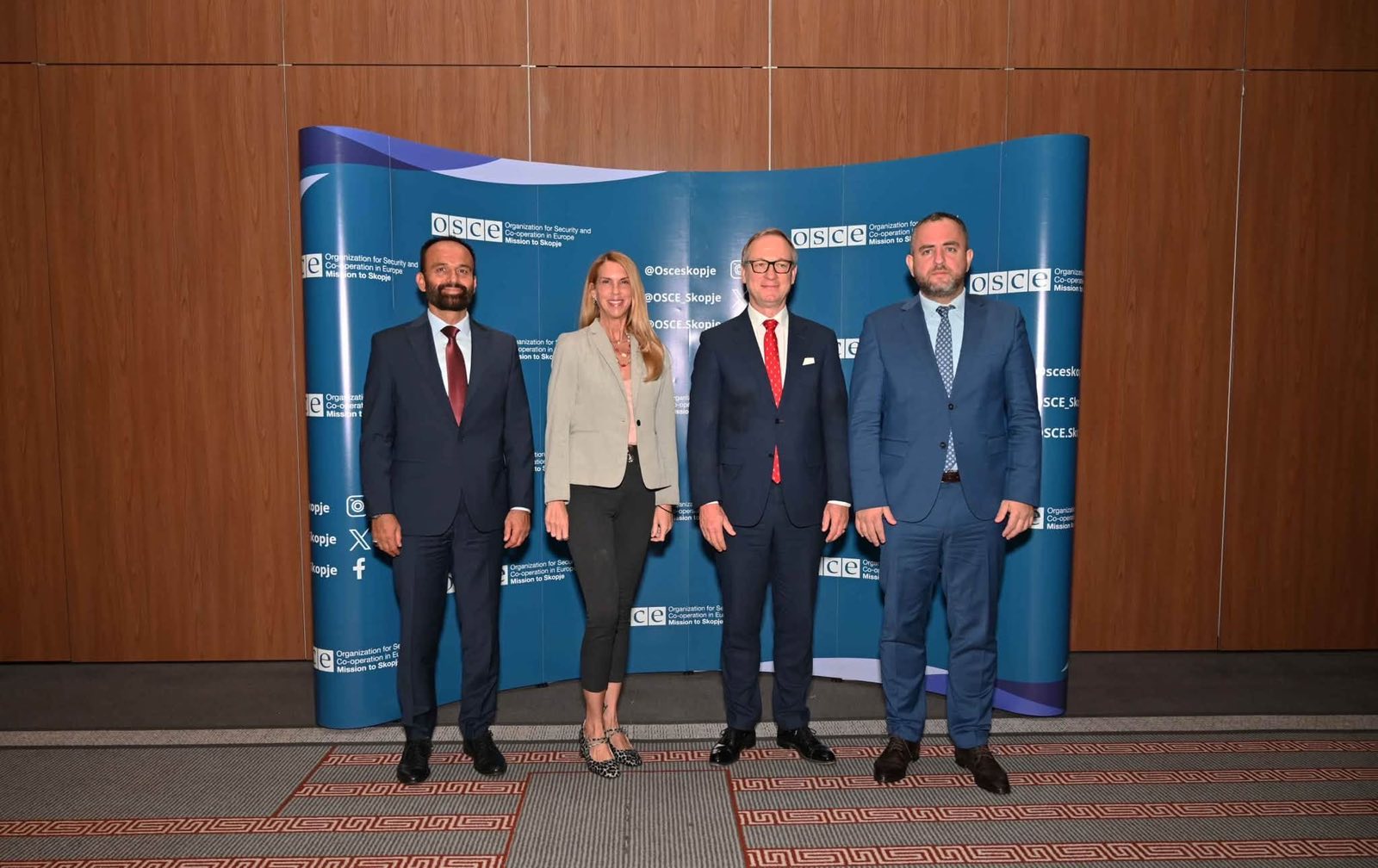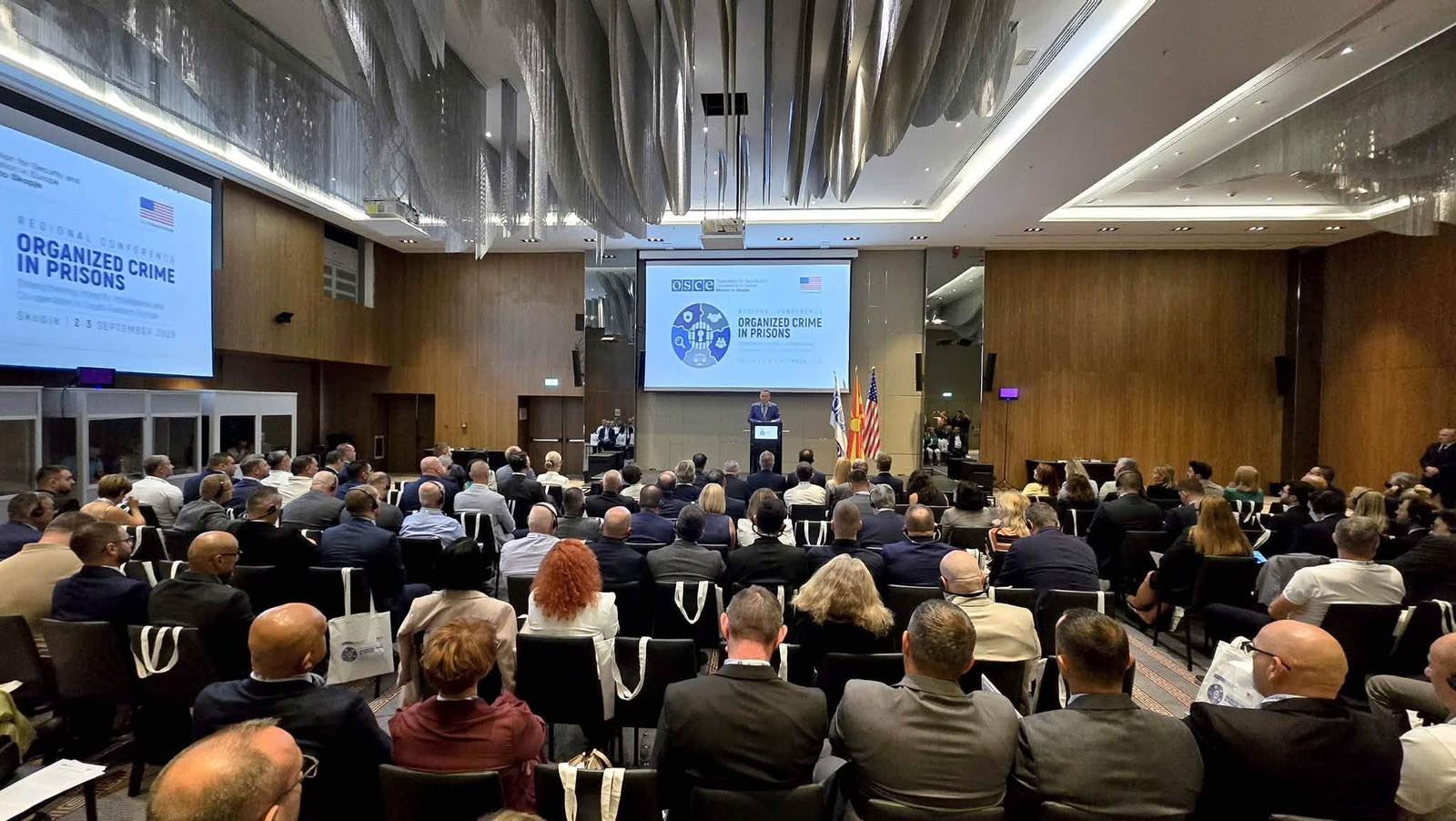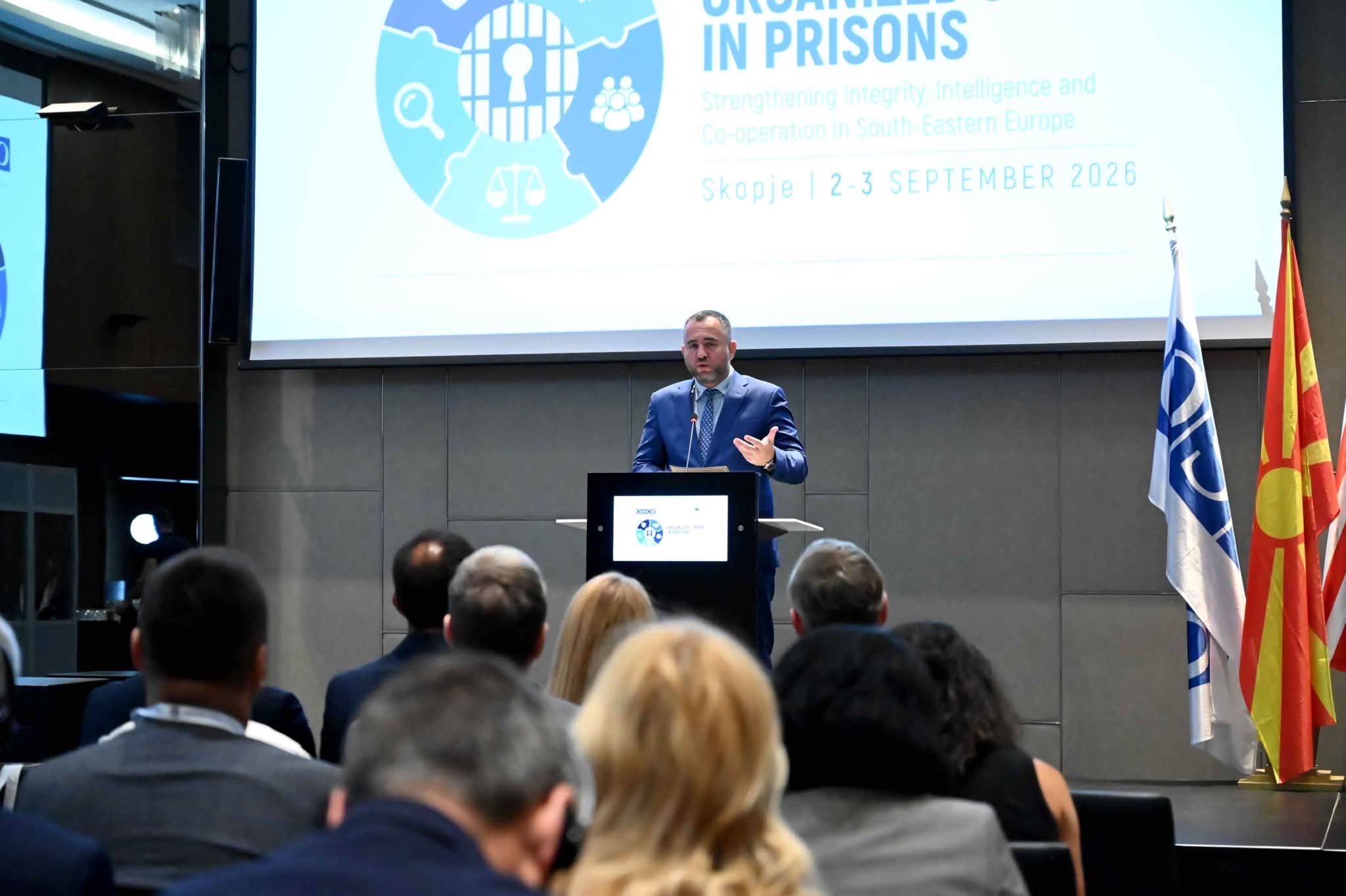
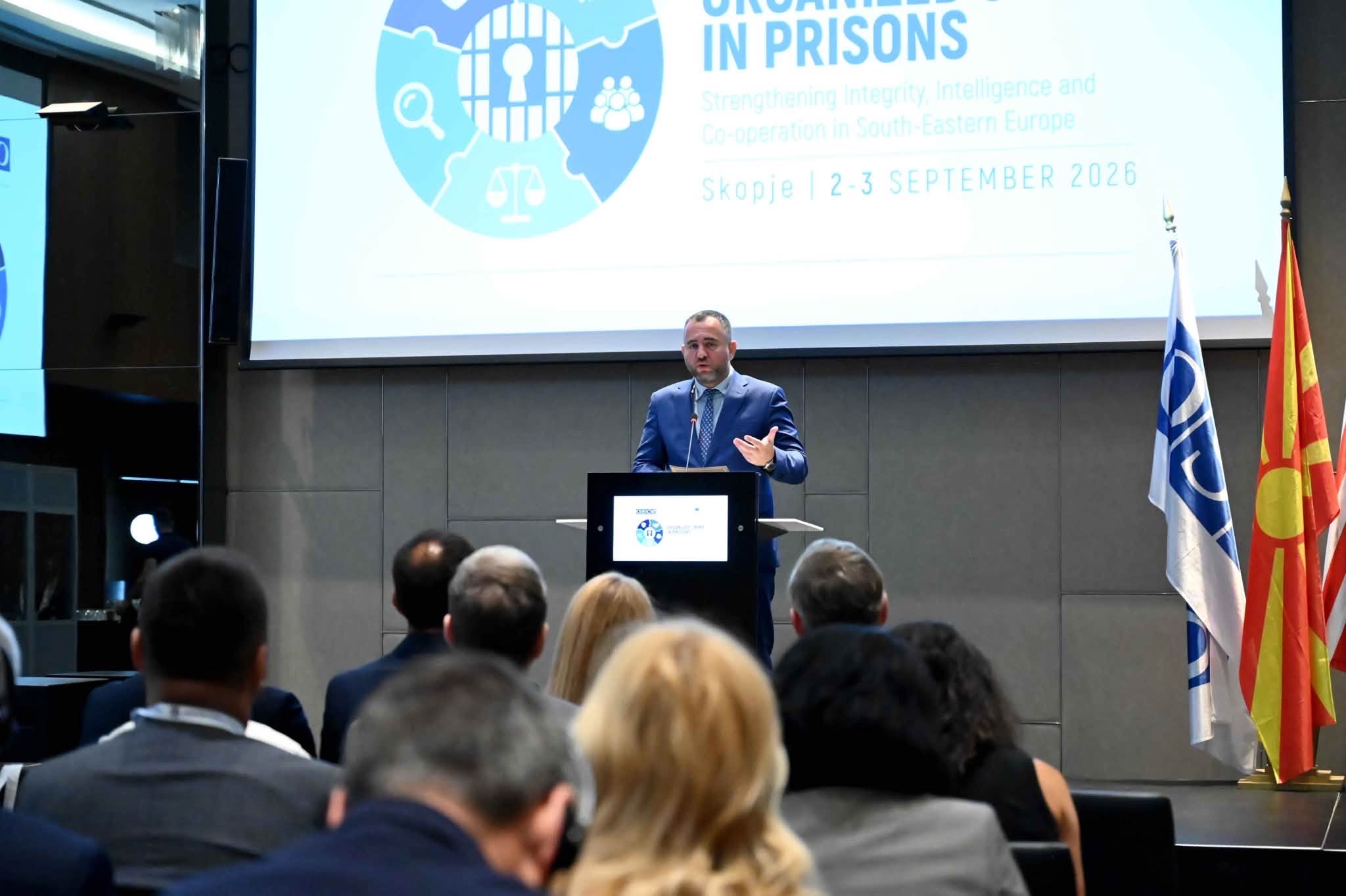
Today, Minister of Interior Panche Toshkovski addressed the Regional Conference “Organized Crime in Prisons: Strengthening Integrity, Intelligence and Cooperation in Southeast Europe,” organized by the OSCE Mission to Skopje, which brings together representatives of relevant institutions and experts from countries across the region.
In his address, Minister Toshkovski emphasized that organized crime in correctional facilities must not be treated as an isolated prison-related problem, as criminal structures can continue to communicate, exert influence and maintain their networks even after being deprived of their freedom, with consequences for the integrity of institutions and the effectiveness of the entire criminal justice system.
“We must openly recognize vulnerabilities. Overcrowding, the way pre-trial detention is applied, insufficiently developed alternatives, the risk of recruiting vulnerable individuals, and the possibility of corrupt influence create opportunities that criminal structures can exploit. At the same time, pressure, intimidation and corruption can directly undermine the integrity and resilience of prison staff. These challenges are real and we must not underestimate them,” Toshkovski said.
The Minister stressed that integrity must be one of the fundamental pillars in addressing this type of crime, through clear professional standards, responsible management, effective mechanisms for screening and preventing corruption, as well as institutional support for officials so they can withstand pressure and undue influence.
He also highlighted intelligence within correctional facilities as a particularly important component, stressing that the timely identification of risks requires quality information, sound analysis and effective information-sharing among prison services, the police, the prosecution and other competent institutions.
“None of these measures can produce full results without cooperation. From prevention and investigation, through prosecution and trial, to the enforcement of sanctions – institutions must view crime as a shared challenge. Only through coordinated operational mechanisms, effective information-sharing, joint training and clear procedures for protecting integrity can we build resilient institutions that safeguard both security and human rights,” Toshkovski said.
Addressing the regional dimension, the Minister pointed out that transnational criminal networks, corruption risks, pressure on employees and the lack of effective intelligence-sharing are challenges that know no borders and therefore require a coordinated, integrated and long-term approach.
Toshkovski welcomed the initiative and the role of the OSCE Mission to Skopje in promoting regional dialogue and creating a platform for practical cooperation and the exchange of experiences among institutions and experts.
At the end of his address, the Minister stressed that the Ministry of Interior remains committed to deepening cooperation with partners in the region and exchanging experiences and good practices, with the aim of building stronger institutions, safer correctional facilities, and a more effective and resilient criminal justice system in Southeast Europe.